
Ever find your morning shower reduced to a feeble dribble or your dishwasher feeling like it’s drinking through a straw? I’ve been there – it’s frustrating, and usually means something is up with your home’s plumbing.
Gold Coast residents should note that the City aims to deliver at least 220 kPa of pressure at each property’s meter connection. (By Aussie standards, that’s roughly 2.2 bar – enough to fill a 9-litre bucket in under 30 seconds.) If your flow is way below that, it’s a clue that a deeper issue might be lurking in your pipes.
So, is it just a clogged aerator or do you really need a full water line replacement? Let’s walk through the detective work. Start by doing the simple checks Gold Coast Water recommends turning off all taps and water users, then watch your meter.
If the meter dial still moves, you almost certainly have a hidden leak on your side of the meter. Next, compare notes with your neighbours – if their pressure is fine, your private plumbing is the culprit. Also consider the time of day: everyone uses more water in the morning and evening, so normal demand can temporarily drop pressure.
Common Causes of Low Water Pressure
Before jumping to replacing a buried pipe, consider these usual suspects:
Mineral buildup or debris: Hard water in Gold Coast homes can leave calcium and magnesium deposits in tap aerators and showerheads, turning a strong jet into a weak spray. Regular cleaning of aerators often fixes this.
Hidden leaks: A tiny leak (even a pinhole) underground or behind walls can steal volume from your system. Clues include unexplained spikes in your water bill or damp patches on walls/floors. (The City suggests checking your meter with everything off for an hour – any movement usually means a leak.)
Faulty valves/pressure regulators: Many homes have a pressure-reducing valve (PRV) near the meter that caps incoming pressure to around 500 kPa. If it’s jammed or misadjusted, it can choke flow throughout the house. Only a licensed plumber should tweak or replace a PRV, since it handles high pressure.
Corroded or outdated pipes: Old galvanized steel or unprotected copper pipes can corrode on the inside, narrowing the bore and turning your water flow into a whisper. Brownish or metallic-tasting water is a red flag. If your water is discolored and the pressure is low everywhere in the house, it may be time to re-pipe.
If you’ve tried cleaning faucets, checked all faucets/valves are fully open (you’d be surprised how often a partly closed valve is the culprit), and none of the above fixes work, then you’re looking at a supply-side problem. In other words, it might not just be the end-tap you see – it could be the main water line itself.
Signs You Need a Water Line Replacement
When is it more than just a leak or a filter? Here are some strong indicators that the water line (the pipe from the street to your meter/house) may need replacing:
Consistently weak flow at every outlet: If all taps – hot and cold, indoors and out – are slow, the issue is likely the supply line.
Discolored or metallic water: This suggests corrosion in the supply pipe. If you flush out your taps and the water only briefly clears, it could mean rust or sediments are inherent to the line.
Persistent or spreading leaks: If you keep fixing leaks (in concrete paths or under garden beds) and they reappear, it could mean a hidden crack. For example, Gold Coast Water notes that a soggy meter box and a running meter (even with all taps off) almost always means a leak on the property side. If so, excavating and replacing that line might be your only cure.
Before moving ahead with Water Line Replacement, it’s worth checking whether a hidden leak is causing the problem. The City of Gold Coast’s guide on checking for water leaks explains how to perform a simple water meter test that can help homeowners identify hidden leaks before arranging professional plumbing repairs.
In short: if simple fixes (cleaning aerators, repairing local leaks, adjusting valves) don’t help and symptoms like brown water or frequent leaks persist, a Residential Water Line Replacement is on the cards. This is essentially ripping out the old supply pipe and installing a new one. It’s invasive and expensive, but for an aging or damaged pipe it’s often the only way to restore normal pressure and water quality.
How Water Line Replacement Works
Replacing your main water line is a big job that pros handle with strict procedures. First, they’ll carefully locate the existing pipe – often using electronic or camera tools – and plan the trench route. In Gold Coast, plumbers follow Australian Standard AS/NZS 3500.1 for plumbing installations, which mandates how pipes and fittings must be installed.
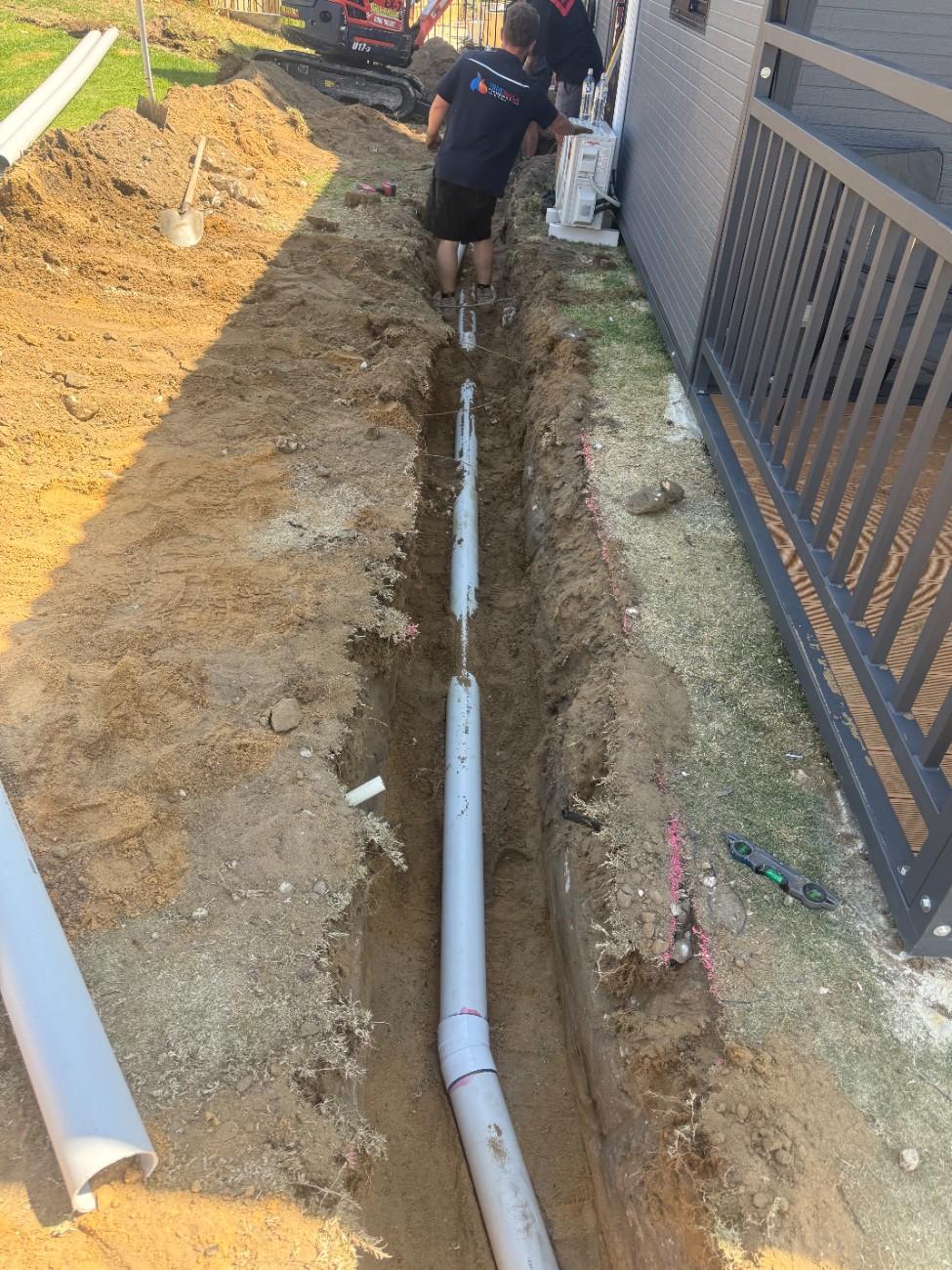
Next, they excavate the trench and remove the old pipe. Depending on ground conditions, this could mean anything from hand-digging through garden soil to breaking concrete or rock. Then comes the key step: installing the new pipe.
Common materials include PVC (plastic), copper, or polyethylene; PVC is cheapest ($1–$5 per foot) whereas copper runs higher ($2–$10 per foot). Regardless of type, the new pipe and joints must be certified and compliant with building codes. Often a temporary bypass (like a standby hose) is set up so you still have water during the swap.
After the new pipe is in, plumbers perform mandatory tests. They’ll pressurize the line to check for leaks and ensure it meets code pressure. Then, per utilities guidelines, they disinfect the pipe – typically flushing it with a chlorine solution for a set time – to sterilize anything before reconnecting to your house.
Finally, they restore the site: refilling the trench, compacting soil, and patching up any concrete, asphalt or garden turf. The whole process can take anywhere from one to several days, depending on complexity and length of pipe.
Budgeting for a New Water Line
Naturally, price is a big concern. Unfortunately there’s no one-size-fits-all number. Industry guides suggest replacement costs start around a few thousand dollars for a typical house, and can go higher based on pipe length and difficulty.
One example breakdown: open-trench digging might run roughly $50–$200 per metre, while trenchless methods (boring under lawns) cost more like $70–$250 per metre. You also pay for the pipe itself (PVC is cheapest, polyethylene mid-range, copper priciest). Labour rates for licensed plumbers in our region run on the order of $50–$150 per hour.
Other costs add up too: permits (especially if you hit a road), traffic control, and restoration of concrete or landscaping after. In sum, expect to budget at least $2–$5K for a standard residential line replacement, and more if your house is set far from the street or has tricky terrain. Always get quotes from experienced local plumbers – they can give a better estimate once they survey your site.
Water Leak Detection Services
Before committing to a full replacement, consider professional leak detection. Modern plumbers use high-tech tools that can save a ton of guesswork (and yard damage). Acoustic listening devices and pressure-test equipment can pinpoint a broken pipe under concrete or lawn by sound or pressure loss.
Infrared cameras can spot wet areas inside walls or underground by temperature differences. Basically, if there’s a hidden leak, these services will find it without invasive digging.
In our city, Gold Coast Water actually advises customers to do a simple meter test for concealed leaks, and to call a licensed plumber if a leak is confirmed. If it turns out the leak is in your private line (for example, a cracked pipe near the meter), the plumber can either repair or advise replacing that section of pipe.
Catching leaks early is crucial – one sprinkler system leak, for instance, can drop your water pressure steadily while your bills skyrocket. When professionals do the detective work, they’ll quickly restore pressure and prevent soil washouts.
Related Plumbing Services (Hot Water Systems)
While we’re talking plumbing, remember that hot water systems can also influence perceived pressure – especially if only the hot taps are weak. An old gas or electric water heater might accumulate sediment, which clogs its outlet. If your cold water pressure is fine but the hot side is flaky, servicing or replacing the heater could be the answer.
Plumbers often bundle these jobs: “While we’ve got the trench open for your water line replacement, we might as well swap in a new hot water heater,” they say. Upgrading your water heater (through hot water heater installation or replacement) ensures your showers stay strong and your tank operates efficiently. Regular hot water servicing is a good preventative measure too.
DIY vs Professional
Replacing a water line is not a typical DIY weekend project. It involves obeying local regulations, acquiring permits, performing pressure tests, and even disinfecting the new pipe. Licensed plumbers are trained to handle all of this (and to coordinate with utilities like Gold Coast Water for any service shutdown).
They’ll also guarantee their work and cover any mess-ups. In contrast, an amateur attempt could lead to failed tests or code violations – ending up more expensive in the long run. In general, for something as critical as your water supply pipe, hire a professional. They’ll ensure the job meets Australian standards and give you reliable service.
Conclusion
Dealing with low water pressure can be a pain, but ignoring it can lead to bigger headaches (like a burst main in your yard!). If your quick fixes and leak checks don’t restore normal flow, it’s time to consider a full water line replacement.
This major plumbing upgrade – replacing the underground pipe from the street to your home – may sound drastic, but it’s the proven cure for an irreparable supply line. On the Gold Coast, replacing that pipe to the latest standards (AS/NZS3500.1) means your home will get strong, clean water again.
So, take action: if you suspect a failing line, contact a licensed plumber. They can perform leak detection services, explain trench vs. trenchless options, and give you a quote. And while they’re at it, ask about your hot water system – maybe combine the water line replacement with a new hot water heater installation to cover all bases. Don’t let low pressure flow dampen your day. Fix it properly, and you’ll be back to full blast showers in no time. Need expert advice? Get in touch to the Waterfox Plumbing team to book a professional inspection and find the right solution for your home.
FAQs
What are common causes of low water pressure?
Mineral buildup in taps, corroded or aging pipes, hidden leaks, or a faulty pressure-reducing valve often cause weak flow. A licensed plumber can pinpoint and fix these issues.
What signs indicate I need a water line replacement?
Persistent low flow in all taps (including outdoor spigots), rusty or cloudy water, unexplained wet spots or sinkholes near the meter, or a constantly running meter (when no water is on) can signal a failing main supply line that may need replacement.
How can water leak detection services help?
Professionals use tools like acoustic listening devices, infrared cameras, and pressure tests to locate hidden leaks without digging up the whole yard. Finding and fixing those leaks often restores pressure and prevents further damage.