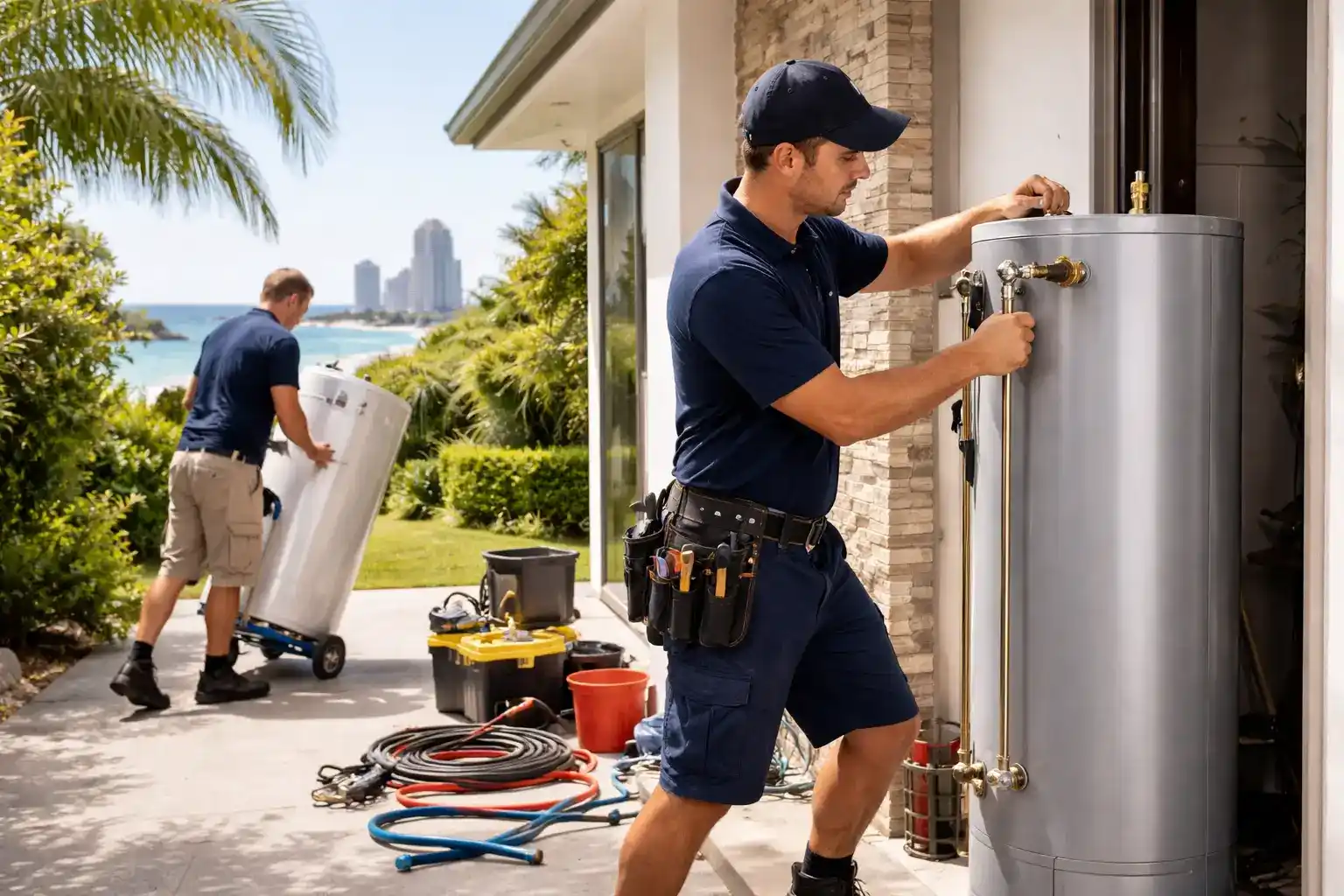
Hot Water Heater Replacement Guide for Gold Coast Homes
Picture this: it’s a cool Gold Coast morning and you’re stepping into the shower hoping for hot water – but nothing’s coming out warm. Suddenly, Hot Water Heater Replacement is on your mind. Replacing a hot water heater can feel overwhelming, but with the right info, it’s a breeze. In Australia about a quarter of home energy goes to water heating, so upgrading can save you money and headaches.
In this guide we’ll walk through everything you need to know about hot water heater replacement in Gold Coast homes – from spotting warning signs to choosing the best new system, budgeting for the job, and even whether to DIY or call in a pro.
When to Consider Hot Water Heater Replacement
So how do you know it’s time for hot water heater replacement? Look out for these telltale signs:
Old Age
Most systems last 8–12 years. If your heater is over a decade old, it’s wise to start planning a hot water heater replacement, as efficiency drops and parts wear out over time.
Discoloured or Rusty Water
Brown or rusty hot water is a sign of internal corrosion. Failing sacrificial anodes allow rust into your taps, and once corrosion spreads, hot water heater replacement is usually the best long-term solution.
Fluctuating Temperature
Does your hot water suddenly go cold mid-shower, or take forever to heat up? These temperature swings often point to a failing element or thermostat. While servicing may help temporarily, it can also signal the system is nearing the end of its life.
Leaks or Pooling Water
Any steady dripping (beyond the normal safety valve release) or puddling around the unit is a serious warning sign. Internal tank cracks or corrosion often mean hot water heater replacement is imminent to avoid water damage.
Loud Noises
Banging, clanging, or hissing sounds usually indicate sediment buildup or failing components. A healthy heater runs quietly—persistent noise means something isn’t right.
Rising Bills or Frequent Repairs
If your energy bills keep climbing or you’re calling the plumber repeatedly, your aging system may be losing efficiency. A newer unit will operate more reliably and cost less to run over time.
Growing Family
More people in the household means higher hot water demand. If your current system can’t keep up, it may be time to upgrade capacity or switch to a continuous-flow system.
In short, any combination of these is a clue. Don’t let cold showers or flooding become a crisis; if in doubt, schedule an inspection and consider hot water heater replacement before disaster strikes.
Choosing the Right New Hot Water Heater System
Replacing your hot water heater isn’t just about swapping old for new – it’s an opportunity to upgrade to a more efficient system. With the Gold Coast’s sunny climate and modern energy trends, hot water heater replacement opens the door to several smart options. The main system types include:
Electric Storage Tank (Traditional)
These systems use a large insulated cylinder to keep water hot 24/7. They’re generally cheaper to buy and install, making them a common choice for basic hot water heater replacement projects. However, electricity costs are high, and energy guides note that electric tanks are “usually cheap to buy but expensive to run.”
Gas (Instantaneous or Storage)
If your home has natural gas, gas hot water systems are highly efficient. Continuous-flow (tankless) units heat water on demand for endless hot showers, while storage gas tanks keep a reserve ready. Gas systems heat quickly and usually cost less to run than electric units. The downside is higher installation costs, plus the need for a gas connection and proper ventilation.
Solar Hot Water
Solar systems use roof-mounted panels to capture the sun’s energy, making them ideal for Gold Coast homes. Although upfront costs can be higher (often $3,000–$7,000 installed), solar hot water delivers long-term savings and reduced emissions. Government rebates may also be available. Keep in mind that solar systems still require electric or gas backup for cloudy days.
Heat Pump Water Heater
Heat pump systems work like a reverse air-conditioner, drawing warmth from the surrounding air to heat water efficiently. While the upfront cost is higher, they use significantly less energy than traditional electric heaters. For homeowners focused on long-term savings and sustainability, a hot water heater replacement with a heat pump can dramatically reduce power bills and carbon footprint. These systems require adequate airflow and produce a low humming sound but perform exceptionally well in the Gold Coast’s warm climate.
Continuous (Instantaneous) Electric
Continuous electric systems heat water only on demand using powerful electric coils. They’re uncommon in Australian homes because of their high power requirements and are rarely recommended for standard hot water heater replacement projects.
Gold Coast’s sunny climate makes solar and heat-pump systems an appealing choice.
The government’s Energy Rating program points out two main system classes: storage vs continuous flow. Storage heaters (electric, gas, solar, heat pump) keep hot water ready in a tank. Continuous flow (often gas or electric) heats water only when you turn on the tap, so you never run out. Each has pros and cons:
For homeowners comparing storage and continuous-flow systems, energy efficiency, and long-term running costs, the Australian Government’s Your Home hot water systems guide provides detailed, unbiased advice to help you choose the right option for your household.
| System Type | Pros | Cons |
| Gas (Storage/Instant) | Fast heating; cheaper to run than electricity; can be tankless for endless hot water | Requires gas line & vent; higher installation cost; emits greenhouse gases |
| Electric (Storage) | Lower purchase/install cost; simple installation | Higher running cost (electricity is costly); limited hot water capacity |
| Solar (with backup) | Eco-friendly; very low fuel cost; big energy savings | High upfront cost; performance depends on sunlight; needs backup heating |
| Heat Pump | Very energy-efficient (uses ambient heat); much lower running costs | Higher upfront cost; needs space/ventilation; makes some fan noise |
When choosing a system for your hot water heater replacement, consider your household size, hot water demand, fuel availability, roof space and shading (for solar or heat pumps), and overall budget. Energy tariffs also matter—off-peak electricity can suit storage systems, while gas and solar options can reduce costs at any time. For a deeper comparison, the Australian Government’s water heating guide is an excellent resource.
Gold Coast/Natural Gas Note: Under Queensland law, if your home has natural gas, your new system must be an efficient model (gas, solar or heat pump) when replacing an old unit. Electric “resistance” hot water heaters are being phased out in Queensland’s new homes and must use an efficient alternative. Always check current regulations before buying.
Planning Your Replacement and Costs
Before tearing out your old heater, it’s important to plan ahead. Hot water heater replacement costs can vary widely – in Australia, a basic replacement typically ranges from $1,000–$2,500, not including any optional upgrades. So why such a big price range? Several key factors influence the final cost.
System Type & Size
Larger tanks and advanced systems like solar or heat pumps cost more upfront. For example, a standard electric 250L storage unit is usually cheaper than a high-end continuous-flow gas system or a solar setup. Choosing the right size and system is crucial to avoid overspending during your hot water heater replacement.
Labour and Permits
Licensed plumber rates in Brisbane and the Gold Coast generally sit around $80–$120 per hour. A straightforward swap with good access may only take 2–3 hours, while more complex installations (such as roof-mounted solar systems or new gas connections) take longer. Permits or inspections may also be required, depending on the system and location.
Location & Access
If your existing unit is tucked away in a tight space or installed on an upper level, labour costs may increase. Carrying large tanks or working in difficult areas adds time and complexity to the job.
Materials and Build Quality
The heater itself can vary significantly in price based on brand, energy efficiency rating, and materials. Stainless steel tanks, for instance, usually last longer and resist corrosion better, but they come with a higher upfront cost.
Disposal of the Old Unit
Removing and disposing of the old tank may involve additional fees, although some plumbers include this in their quote. In some cases, scrap metal recycling can slightly offset disposal costs.
Budget Tip
Always get quotes from at least three licensed plumbers when planning a hot water heater replacement. Don’t focus solely on the cheapest option—look at warranties, experience, and customer reviews. A quality installation can prevent leaks, safety issues, and costly repairs down the line.
What’s the Total Cost?
A quick snapshot of typical figures in Australia for hot water heater replacement:
- Electric storage systems: $450–$1,800 installed.
- Gas systems: $700–$1,900 installed.
- Solar hot water: $3,000–$7,000 installed.
- Heat pump: Often $2,500–$5,000 installed (higher upfront).
- Plus plumbing labor ($100–$300+), any electrical or gas fittings, and disposal.
Finally, don’t forget running costs: Crew Plumbing notes average annual energy bills are roughly $295–$665 for gas, $700–$925 for electric, but only $65–$365 for solar. Those long-term savings matter!
Installation: DIY vs. Professional
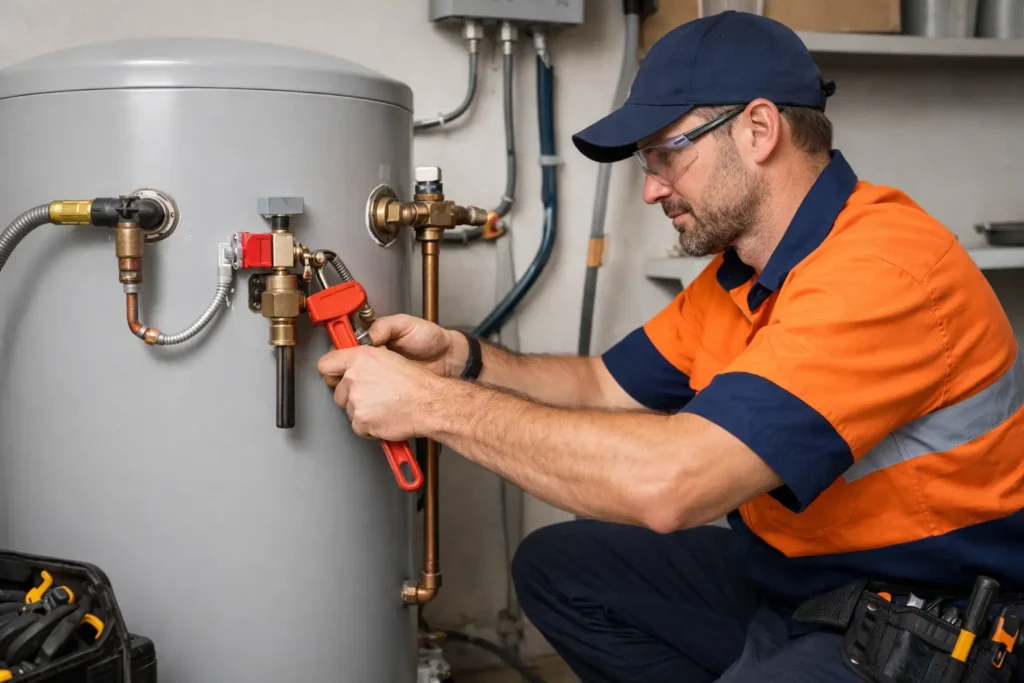
Tempted to DIY your hot water heater replacement? Think twice. This isn’t a simple shelf to hang – it involves electricity and/or gas, water plumbing, pressure systems and safety valves. Mistakes can cause flooding, fire hazards or carbon monoxide risks.
- Gas heaters: MUST be installed by a gas-licensed plumber. Queensland rules forbid unlicensed gas work.
- Electric heaters: Must be hard-wired by a qualified electrician or plumber and grounded properly.
- Roof systems (solar): Need structural checks and secure mounting, plus working at height.
Hiring a pro ensures compliance with local codes and peace of mind. A licensed installer follows guidelines (and often they’ll help recycle the old unit). Yes it costs more upfront, but it avoids costly blunders. If you really want to save, you could handle non-critical parts like draining the old tank or painting an enclosure, but leave the hookup to the experts.
On the flip side, if you’re a skilled DIYer (and only have a simple electric tank to swap), you could replace a heater in a couple of hours. Just be 100% certain it’s safe and local law permits it. In most cases though, calling a plumber is the way to go – they’ll do it quickly and guarantee their work.
Extending Your Heater’s Life
While planning for hot water heater replacement, don’t forget maintenance on any existing system. A little care can add years to a tank’s life:
- Flush the Tank: Sediment builds up in storage tanks, making them noisy and inefficient. Once a year, drain a few liters to remove grit. This small act can delay failure and improve heat-up time.
- Check the Anode Rod: Many tanks have a “sacrificial anode” that prevents rust. Inspect or replace it every 3–5 years if you can. It’s cheap insurance against tank corrosion.
- Test Valves: Ensure the pressure-temperature relief valve (TPR) isn’t leaking. If it drips constantly, replace it.
- Insulate: A good blanket around the tank and insulating pipes can reduce heat loss – saves energy and takes stress off the heater.
- Watch for Leaks and Strange Noises: Early signs (we covered these above) should prompt a call to the plumber before the system totally fails.
Regular check-ups keep your hot water flowing and might postpone that dreaded replacement – or at least prepare you for it.
Conclusion
Swapping out your old water heater might seem daunting, but it’s an opportunity to upgrade to a more efficient, reliable system. Keep an eye on the warning signs (odd noises, rusty water, age 10+), and when the time comes, choose the type that fits your Gold Coast lifestyle – whether that’s an economical gas model, an eco-friendly solar system, or a sleek heat pump.
Factor in costs, rebates, and always use licensed professionals for installation. With the right planning, your hot water heater replacement will keep your showers steamy and your electricity bill in check. Ready for comfort? Reach out to a trusted local plumber for a quote or share this guide with someone who needs it. Happy (and hot!) bathing, Gold Coast!
FAQs
-
How do I know when to replace my hot water heater?
Look for rusty water, leaks, rumbling noises or cold showers. Age over ~10 years is a key sign. If in doubt, call an expert.
-
What is the typical lifespan of a hot water heater?
Usually 8–12 years. Many pros recommend replacement around the 10-year mark when efficiency drops.
-
How much does hot water heater replacement cost?
In Australia, expect about $1,000–$2,500 total for a new unit and install. Exact cost varies by type, size and labor.