
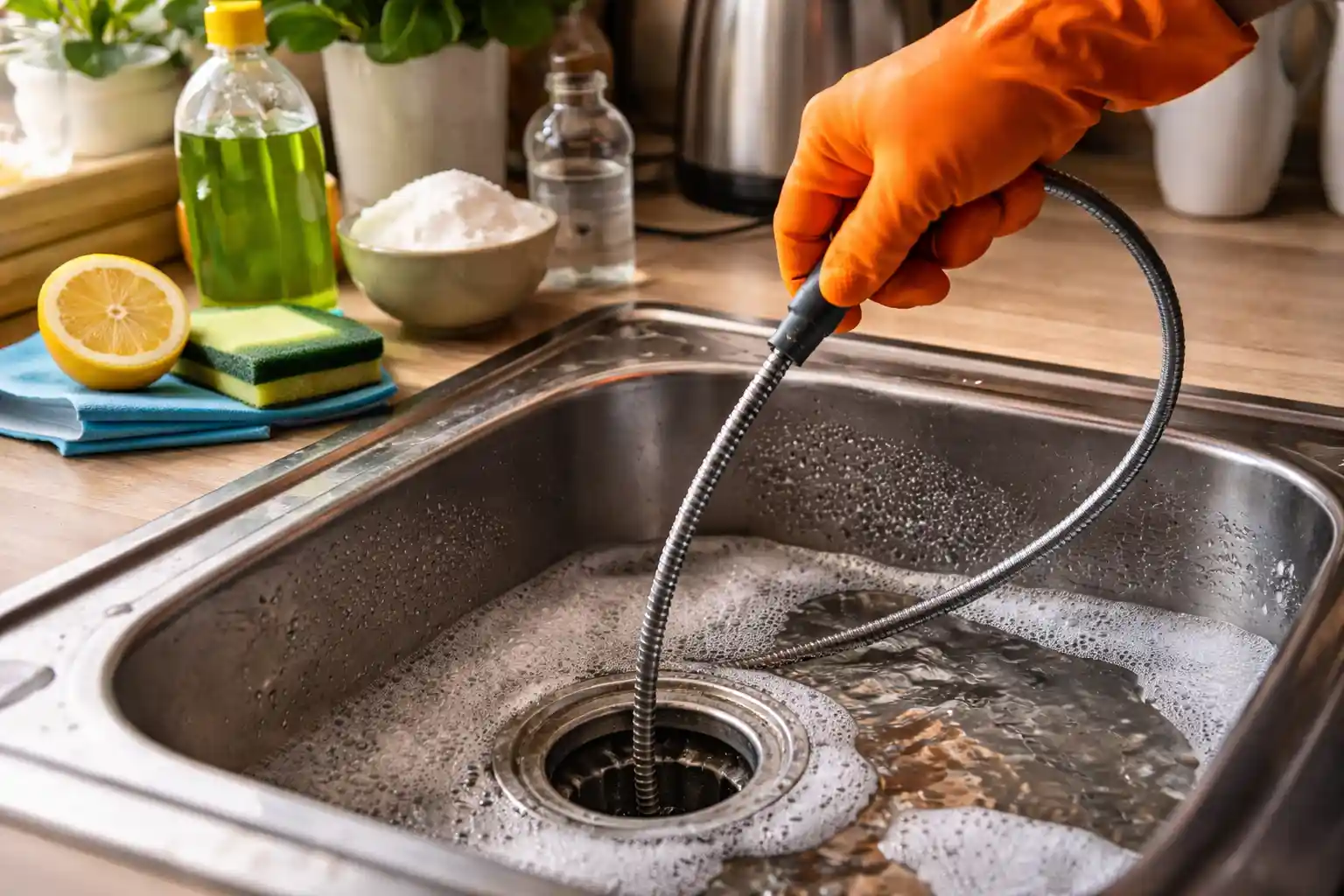
Ever notice your kitchen sink starting to send up a signal flare of foul odours? For many Gold Coast homeowners, cleaning kitchen sink drain is a hidden chore – until the water starts bubbling back at you. But keeping that drain clear is like fine-tuning a beachfront Mustang; it makes everything run better. You’ve got sunshine and surf on the Gold Coast, so why settle for a grimy sink? A simple sweep-through of your drain can prevent a world of hassle (and funky smells). Think of your sink drain as the unsung hero of your kitchen: out of sight, out of mind, until it forgets its lines.
Dealing with a clogged sink isn’t exactly glamorous. Maybe you’ve been rinsing plates and dripping dish soap into a sluggish drain while wondering, “Should I just pour bleach down there?” Hold that thought. By understanding how cleaning kitchen sink drain really works, you’ll become the home-maintenance rock star of your neighbourhood. From natural DIY tricks to knowing when to dial a plumber, this guide has you covered. We’ll dive into easy fixes, clever hacks, and expert tips – all in plain English – so your Gold Coast kitchen stays spick and span.
Why Cleaning Kitchen Sink Drain Matters
Let’s get real: the kitchen sink drain sees some heavy action. Over time, fat from your fry-ups, random bits of food, and soap scum start to throw a house party in your pipes. That’s why cleaning kitchen sink drain systems regularly is more important than most homeowners realise. According to Queensland plumbers, clogs happen because of a “gradual build-up of grime, leftover food, grease, soap, and hair care products” in the drain. On the Gold Coast, the warm climate can even encourage microbial growth that adds to unpleasant odours.
Picture pouring a splash of hot sauce down there only to realize it’s one of many steps in your chef routine that led to a gooey mess. It’s like assuming your garage door will fix itself – not quite! Regularly cleaning kitchen sink drain stops that gradual build-up. Instead of dealing with a countertop flood or dinner guests raising an eyebrow at a pongy kitchen, a quick scrub or flush keeps everything running smoothly.
Grease and Fat
Aussie barbecues are great, but if bacon grease finds its way down the drain, it cools and hardens inside the pipes. A Gold Coast plumbing guide warns that fats should never go down the drain, as they’re one of the biggest reasons cleaning kitchen sink drain blockages become necessary.
Food Scraps
Coffee grounds, noodle bits and vegetable peelings might seem harmless, but they can congeal into rock-hard sludge under there.
Soap and Detergent
Mild over time is ok, but heavy flows of detergent or dish soap can leave a film that traps debris.
Foreign Objects
Even hair (yes, sometimes short beard hairs or smoothie seeds!) and cling wrap can drift into the drain. They’re small, but paired with grease they can form a real roadblock.
If your sink starts acting up – slow drain, gurgling sounds, or a subterranean swamp smell – it’s a yellow flag that cleaning kitchen sink drain should be on your weekend to-do. Remember, Gold Coast Council points out that homeowners are responsible for maintaining their own drains. In other words, it’s on us to keep that drain clear, or pay the piper (and maybe the plumber).
DIY Cleaning Kitchen Sink Drain Techniques
Not all drain cleaning needs industrial-strength chemicals. In fact, cleaning kitchen sink drain systems with simple DIY methods is often all it takes to prevent blockages. A sunny Gold Coast afternoon is the perfect time to whip out some eco-friendly solutions. Here are a few tried-and-true DIY tactics for effective at home.
A plumber uses a drain auger (snake) to tackle a stubborn kitchen sink clog.
Boiling Water
Start simple with a kettle. Boil a full pot of water and (carefully!) pour it slowly down the drain. This method of cleaning kitchen sink drain lines works by melting grease and soap residue. Adding a squirt of dish soap helps break up oils even further. This cheap hack is often enough for light grease clogs and routine maintenance. It’s safe for most pipes, though be cautious with older plastic or PVC traps.
Baking Soda & Vinegar
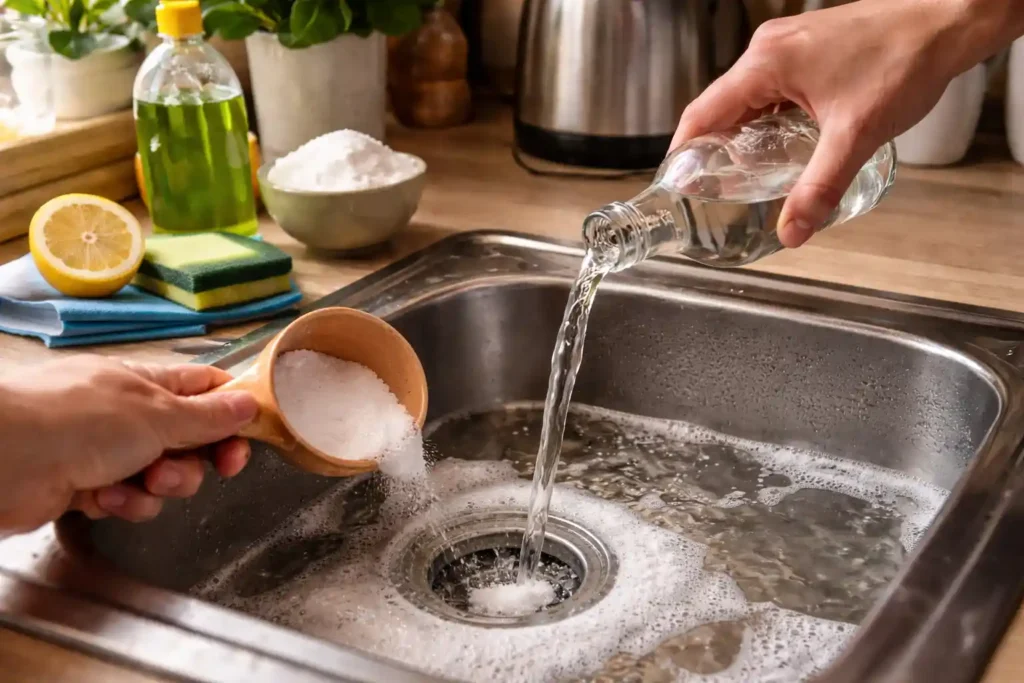
The classic fizz bomb and a favourite for cleaning kitchen sink drain naturally. Pour about ½ cup of baking soda into the drain, followed by ½ cup of white vinegar. Cap the drain or plug it for 15–30 minutes while the mixture foams up, scrubbing the pipe walls and breaking down gunk. Finish by flushing with hot water. This non-toxic combo helps prevent nasty smells.
Tip: Follow it with a squeeze of lemon to deodorise and leave your drain smelling like a citrus orchard on Currumbin Beach.
Salt and Dry Yeast
Another old-school method for ongoing cleaning kitchen sink drain maintenance is to pour a cup of table salt and a packet of dry baker’s yeast into the drain. Wait about an hour, then flush with hot water. The yeast feeds on residue and expands slightly, helping loosen debris, while salt breaks down grease. Think of it as a probiotic smoothie for your drain.
Coffee Grounds
Latte lovers can put used coffee grounds to work. Dry them first, then pour a small handful into the drain and rinse with hot water. Their natural grit can help scrub oily buildup during routines. Use sparingly, though too many grounds can clump together and cause new problems.
Each of these methods uses pantry staples, which is a bonus. While they won’t clear major blockages, they’re excellent for keeping things fresh and flowing. When DIY flushing isn’t enough, manual methods can help:
Plunger
Most homes have one tucked away. Place it over the drain, seal it tightly, and pump firmly. The suction can dislodge small clogs and often restores flow after basic attempts.
Drain Snake/Auger
For tougher clogs, try a handheld snake (available at hardware stores). Feed it into the drain and twist to snag or break up the blockage. It’s a bit like fishing in your pipe. (Just be gentle so you don’t scratch the pipe.)
Remove and Clean P-trap
For serious debris, place a bucket under the U-shaped pipe (the P-trap) beneath the sink, unscrew it, and clear out the buildup. It’s messy work, but one of the most effective cleaning kitchen sink Plumbing drain solutions. Reattach it securely and run water to test.
For clarity, here’s a quick comparison:
| Method | How It Works | Use When |
| Boiling Water | Heat melts grease and soap scum | Light, fresh clogs or monthly flush |
| Baking Soda & Vinegar | Fizzing chemical reaction breaks down buildup | Routine maintenance or mild odor |
| Salt + Dry Yeast | Yeast expands, salt cuts grease | Weekly prevention |
| Coffee Grounds | Acidity and grit dissolve grease | Deodorising & minor scrubbing |
| Plunger | Suction forces debris loose | Sudden minor clogs |
| Drain Snake / Auger | Physically removes or breaks clogs | Stubborn or deep clogs |
These DIY options are great first lines of defense. Still, if your kitchen sink drain is gurgling ominously or completely blocked, it might be time to call the pros. Brisbane experts warn that persistent use of caustic chemical cleaners can corrode your pipes and end up costing you more in repairs. Plus, harsh liquids leech into the water table and harm aquatic life (not exactly a mood booster for your next seaside BBQ).
Preventing Clogs with Regular Maintenance
An ounce of prevention is worth a gallon of cure – especially on the daily grind of kitchen cleanup. When it comes to cleaning kitchen sink drain systems, a few simple habits can make all the difference. With regular care, you can keep your kitchen sink flowing freely and avoid unpleasant blockages.
Use a Drain Strainer
Aussies love a good hardware hack. Place a fine mesh strainer or disk (they’re cheap) over your sink drain. It catches stray veggies, coffee grounds and eggshells before they go down the hole. Just empty it into the bin when it fills. Think of it as your kitchen sieve – out of sight, out of mind, until you empty it.
Don’t Pour Grease Down the Drain
It sounds obvious, but so many of us do it. Frying bacon? Wait for the fat to cool and set, then scrape it into a can. Once hardened, throw the can into the bin. If grease does sneak in, immediately flush with boiling water to wash it away. Avoiding grease buildup is the #1 rule of cleaning kitchen sink drain lines effectively.
Mind the Garbage Disposal
If you have a garburator (garbage disposal) in your Gold Coast kitchen, treat it right. It’s not a trash compactor – only grind soft waste like small fruit peels. Hard bits (bones, eggshells, large potato peelings, coffee bean hulls) can jam the blades. After using it, run cold water for 30 seconds to flush bits out, and occasionally grind a few ice cubes to sharpen the blades. A monthly baking soda + vinegar flush can deodorise and degrease it.
Flush with Hot Water
Every few weeks, fill your sink with hot tap water and release it. This acts like a thermal rinse, pushing grime through. Once a month, do a “kettle dump”: boil water and pour it down to melt any new buildup.
Clean the P-trap Regularly
That curved pipe under your sink (the P-trap) loves to hide gunk. Every couple of months (or if your sink smells funky), pop off the connectors, slip the trap out, and wipe it clean. You’ll be surprised what’s collected in there. Just be sure to put a bucket underneath first – this can get a bit splashy.
Avoid Harsh Chemicals
It’s tempting to grab a bottle of drain cleaner, but it’s like putting out a small grease fire with lighter fluid. Over time, those lye-based cleaners erode pipes and harm the environment. Natural methods or professional help are safer options for cleaning kitchen sink drain problems long-term. Your pipes (and the Gold Coast’s waterways) will thank you.
Consistency is key. Make a mini ritual: after your big surf session or whenever you’re washing plates, give the drain a quick visual check and maybe a cold water flush. That tiny effort pays off huge – preventing surprises like a blocked sink during a backyard BBQ.
Safe and Effective Tools for Your Sink
Beyond potions and home remedies, there are a few go-to tools that make cleaning kitchen sink drain easier:
Rubber Plunger
There’s a reason every household has one. Use firm, even plunges – pretend you’re clearing out a bad dream from beneath your sink.
Hand Auger (Drain Snake)
These manuals are gold for hairy or deep clogs. Push it in, twist, and pull out the offending blob. It might look like a worm, but it’s your friend in disguise.
Wet/Dry Vacuum
If you’ve got one, set it to wet mode, create a tight seal over the drain, and let it suck the clog up. Just be prepared for a bit of clean-up after.
Enzyme Cleaners
A more modern approach: there are Aussie brands of enzyme drain cleaners made from natural bacteria. These work overnight to “eat” organic debris. Follow the instructions on the bottle (usually pour and leave). They’re safer on pipes than chemicals, but slower-acting.
Professional Hydro Jet
For a really tough or recurring block, plumbers use hydro jetting – a high-pressure water hose that scours the pipes clean. Think of it as power-washing your drains. It’s a pro move, but 100% chemical-free and can get to clogs miles down the line.
If you do use tools or even chemical cleaner once in a while, always ventilate the kitchen and use gloves. We want the drain clean, not to field-strip our digestive system from fumes!
When to Call a Professional
Sometimes, even the best DIY efforts at cleaning kitchen sink drain systems can’t conquer a stubborn blockage. In Queensland, certain plumbing and drainage work must legally be carried out by a licensed plumber, as outlined under Queensland plumbing laws. If the slowdown is severe, recurring, or affecting multiple fixtures, it’s often a sign of a deeper issue in the plumbing that requires professional tools and expertise.

Maybe the slowdown is severe, or it’s happening in multiple sinks often a sign of a deeper issue in the plumbing. In those cases, it’s time to ring a plumber’s hotline. Gold Coast professionals use drain cameras to inspect pipes, pinpoint exactly where the problem lies, and fix it without guesswork. They’re equipped to handle root intrusions, collapsed pipes, or massive grease build-ups that go far beyond what vinegar and baking soda can solve.
City of Gold Coast guidelines emphasise that if a blockage is on your side of the property line your household pipes it’s the homeowner’s responsibility to clear it. That’s fair enough: these so-called “private drains” are yours. Calling a licensed plumber for advanced cleaning kitchen sink drain issues ensures the job is done properly. And if the problem turns out to be in the city’s main sewer line, you may even be eligible to recover some of the costs.
Pro tip: Always check that your plumber is licensed by the Queensland Building and Construction Commission (QBCC). A reputable technician won’t just fix the clog; they’ll explain what caused it and how to prevent future kitchen sink drain cleaning problems.
A clean, well-maintained sink means fewer worries. Regular maintenance is the key to avoiding sudden drain disasters.
Maintaining a clean kitchen sink drain isn’t rocket science, but it does require some routine TLC. Avoiding chemical quick fixes, adopting simple habits (like straining your scraps), and acting early on slow drainage will keep your Gold Coast home drama-free. After all, life on the coast is too good to be interrupted by a balky sink.
Conclusion
Who knew that a small act like cleaning kitchen sink drain could upgrade your daily routine? By understanding what clogs your drains and how to fix them, you become the master of your Gold Coast kitchen. Remember: regular drain care (simple steps like boiling-water flushes and baking soda scrubs) is your secret weapon against clogs. When trouble hits, natural methods or a quick plunger usually do the trick. And if the clog is stubborn, professional help is just a call away.
Now it’s over to you: take a moment this week to give your sink a little love. Run hot water, check the trap, and pat yourself on the back for a job well done. Your home – and your guests – will thank you. If you want to dive deeper, pick up that phone or search online for Gold Coast drain experts; they’re on standby to help. Stay proactive, and let your kitchen be as sparkling as a morning on Broadbeach.
Keep Your Kitchen Running Smoothly? Persistent sink clogs or slow drains can be frustrating, even with regular DIY maintenance. For reliable solutions, it’s best to call licensed professionals who can handle plumbing issues safely and efficiently. You can also check out professional gas fitting services to ensure all your home systems are working perfectly.